- kesyaipl2@gmail.com
- Rajdhani Park, Mubarkpur, Delhi, 110041, India
Blogs

Agarbatti Industry Financial Planning - Expert Insights
Price: ₹48224
Financial Planning for Agarbatti Entrepreneurs
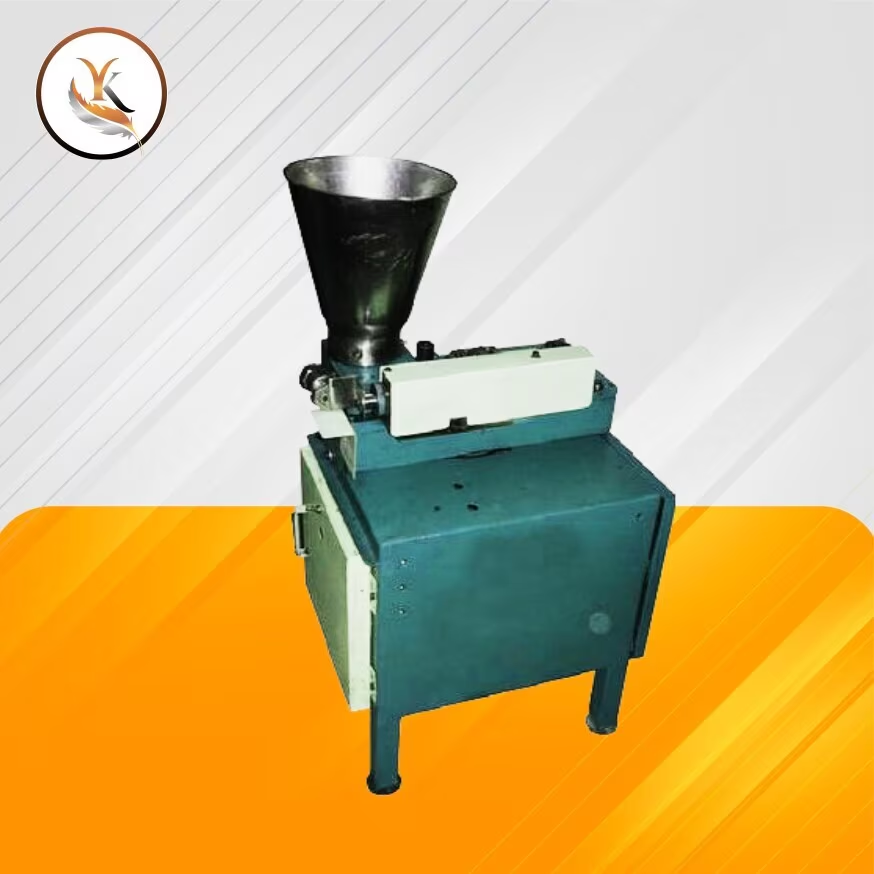
In the competitive world of incense production, agarbatti making machines have emerged as a game changing technology for manufacturers across the country.
Key Aspects and Features
The bamboo stick preparation process in agarbatti manufacturing requires precision and consistency to ensure uniform stick thickness and length across all production runs. Modern cutting systems use sharp hardened steel blades and precision guides to achieve clean accurate cuts. Regular blade maintenance and adjustment is necessary to maintain cutting quality and prevent bamboo waste.
Different types of agarbatti serve different purposes in the market. Common varieties include dhoop sticks, sambrani sticks, loban sticks, and flavored sticks for specific religious ceremonies. Each type has specific dimensions, coating requirements, and fragrance profiles. Understanding the market demand for different varieties helps manufacturers optimize their production mix.
Business and Market Overview
The agarbatti market in India is projected to continue growing at a healthy rate over the coming years. Factors driving this growth include increasing religious and spiritual practices, growing export demand, expanding retail networks, and rising consumer spending on puja supplies. Agarbatti manufacturers who invest in quality production capabilities are well positioned to benefit from this growth trend.
The financial aspects of running an agarbatti manufacturing business require careful management to ensure long term viability. Regular financial analysis, cash flow management, and cost optimization are essential business practices. Working with experienced accountants or financial advisors can help manufacturers make informed decisions about investments, pricing, and growth strategies.
Production and Operations
The production capacity of agarbatti making machines varies widely depending on the machine type and configuration. Manual machines can produce 200 to 500 sticks per hour, while semi automatic models achieve 500 to 1500 sticks per hour. Fully automatic production lines can produce up to 3000 or more sticks per hour, making them ideal for large scale manufacturers. Choosing the right production capacity based on market demand and investment budget is essential for business success.
Conclusion
The future of agarbatti manufacturing in India looks promising with continued growth in spiritual practices, expanding export markets, and increasing demand for natural and organic incense products. Manufacturers who invest in quality production capabilities today will be well positioned to benefit from these long term market trends.
Buy Now
agarbatti making machine manufacturer
agarbatti stick making machine
agarbatti making machine supplier
masala agarbatti machine
agarbatti machine for small business
agarbatti business
agarbatti manufacturing process
agarbatti machine price
agarbatti machine cost
best agarbatti machine
automatic agarbatti machine
agarbatti manufacturing startup
agarbatti manufacturing
agarbatti production
agarbatti making machine
agarbatti bamboo stick machine