- kesyaipl2@gmail.com
- Rajdhani Park, Mubarkpur, Delhi, 110041, India
Blogs

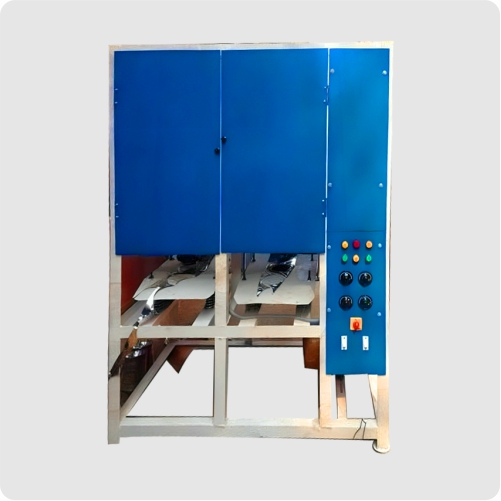
Commercial-Grade Paper Plate Press Machine
Price: ₹80674
Commercial-Grade Paper Plate Press Machine
Introduction
Effective packaging of finished paper plates is important for protecting the product during storage and transportation while also creating an attractive presentation for customers. Common packaging options include plastic wrapping, cardboard boxes, shrink wrapping, and custom printed packaging. The choice of packaging depends on the target market, distribution channels, and branding strategy of the manufacturer.
Shrink wrapping is one of the most popular packaging methods for paper plates as it provides excellent protection against moisture and dust while keeping the plates securely bundled. Shrink wrapping machines can be integrated into the production line for continuous packaging of finished plates. The transparent wrap allows customers to see the product while keeping it clean and protected.
Custom printed packaging provides an opportunity for paper plate manufacturers to differentiate their products and build brand recognition. Packaging can feature the manufacturer's logo, product information, usage instructions, and promotional messages. Investing in attractive packaging helps command premium pricing and builds customer loyalty in competitive markets.
Proper packaging also facilitates efficient storage and distribution of paper plates. Stackable packaging designs maximize warehouse space utilization, while standardized package sizes simplify inventory management and order fulfillment. Well-designed packaging reduces damage during handling and transportation, minimizing product losses and customer complaints.
When it comes to choosing the right equipment for paper plate manufacturing, understanding the nuances of different machine types and their capabilities is essential. The market offers a wide range of options from basic manual machines to sophisticated fully automatic production lines. Each type has its own set of advantages and limitations that should be carefully evaluated against your specific business requirements and budget constraints.
The paper plate manufacturing industry continues to evolve with new technologies and innovations emerging regularly. Staying informed about the latest developments helps manufacturers make better decisions about equipment upgrades, process improvements, and market strategies. Industry associations, trade publications, and technology exhibitions are valuable sources of information about industry trends and best practices.
Customer feedback and market research play a vital role in shaping product development and business strategy in the paper plate industry. Understanding what customers value most in paper plates whether it is price, quality, design, or environmental credentials helps manufacturers focus their efforts and resources on the areas that matter most to their target market.
Overview
The market for paper plates continues to expand globally, driven by increasing urbanization, changing lifestyles, and growing environmental awareness. The food service industry, which includes restaurants, hotels, catering companies, and food courts, represents the largest consumer segment for paper plates. The paper plate making machine enables manufacturers to serve this growing market with competitively priced, high-quality products.
Seasonal demand patterns in the paper plate industry create opportunities for manufacturers to optimize their production and inventory management. Demand typically peaks during festival seasons, wedding seasons, and holiday periods when large gatherings and celebrations drive increased consumption of disposable tableware. Planning production schedules around these demand patterns helps manufacturers maximize their revenue and profitability.
The competitive landscape in the paper plate industry includes both organized and unorganized sectors. While large manufacturers benefit from economies of scale and established distribution networks, small and medium manufacturers can compete effectively by offering specialized products, better quality, and personalized customer service. The paper plate making machine gives small manufacturers the production capabilities to compete in this dynamic market.
Market research is essential for paper plate manufacturers to understand customer needs, competitive dynamics, and growth opportunities. Regular engagement with customers, distributors, and industry associations provides valuable insights into market trends and emerging opportunities. Manufacturers who invest in understanding their market are better positioned to adapt their products and strategies to meet evolving customer demands.
The financial aspects of running a paper plate making business require careful management to ensure long-term viability. Regular financial analysis, cash flow management, and cost optimization are essential business practices. Working with experienced accountants or financial advisors can help manufacturers make informed decisions about investments, pricing, and growth strategies.
Building a strong team is crucial for the success of any paper plate making operation. From skilled machine operators to quality control personnel and sales staff, each team member contributes to the overall performance of the business. Investing in employee development, creating a positive work environment, and offering competitive compensation helps attract and retain talented individuals.
Supply chain management in the paper plate industry involves coordinating with raw material suppliers, machine manufacturers, packaging providers, and logistics partners. Building strong relationships with reliable suppliers ensures consistent access to quality materials at competitive prices. Effective supply chain management contributes directly to product quality, delivery reliability, and cost efficiency.
Key Features
The space requirements for a paper plate making operation depend on the type and number of machines, the volume of raw materials and finished goods inventory, and the operational workflow. A small-scale operation with one or two manual machines may require as little as 200 to 400 square feet, while a medium-sized operation with automatic machines typically needs 800 to 1500 square feet. Large industrial operations may require several thousand square feet.
Efficient layout planning for a paper plate making facility should consider the flow of materials from raw paper storage through the production area to finished goods storage and shipping. The layout should minimize material handling distances, provide adequate workspace around each machine, and allow for future expansion. Good ventilation and lighting are important for both operator comfort and product quality.
Storage considerations for a paper plate making operation include secure, dry storage for raw paper rolls and protected storage for finished plates. Paper rolls should be stored off the floor in a dry environment to prevent moisture damage. Finished plates should be packaged and stored in a way that prevents crushing and contamination. Adequate storage space ensures continuous production without interruptions.
The cost of space is an important factor in the overall economics of a paper plate making business. Industrial area locations typically offer better infrastructure and utilities but may have higher rent compared to rural or semi-urban locations. Some manufacturers choose to establish operations in their own properties to eliminate ongoing rent costs and have greater control over their facility.
Marketing and sales strategies for paper plates should be tailored to the specific target market and distribution channels. For wholesale markets, emphasis should be on competitive pricing, consistent quality, and reliable supply. For retail markets, attractive packaging, brand building, and point-of-sale materials are important. For institutional buyers, product specifications, certifications, and service capabilities are key differentiators.
Environmental sustainability is becoming an increasingly important consideration for paper plate manufacturers. Implementing sustainable practices such as using recycled materials, minimizing energy consumption, reducing waste, and obtaining environmental certifications can provide competitive advantages and attract environmentally conscious customers and partners.
When it comes to choosing the right equipment for paper plate manufacturing, understanding the nuances of different machine types and their capabilities is essential. The market offers a wide range of options from basic manual machines to sophisticated fully automatic production lines. Each type has its own set of advantages and limitations that should be carefully evaluated against your specific business requirements and budget constraints.
Benefits and Advantages
Starting a paper plate making business requires careful planning and consideration of several factors including market demand, raw material availability, machine selection, and financial resources. The initial investment for a paper plate making business can range from a modest amount for a basic manual setup to a significant sum for a fully automatic production line. The choice of machine depends on the expected production volume, available capital, and target market segments.
A well-prepared business plan for a paper plate making venture should include detailed market analysis, financial projections, marketing strategies, and operational procedures. Understanding the local market dynamics including competition, pricing trends, and customer preferences is crucial for success. Many successful paper plate manufacturers started with small operations and gradually expanded as they gained market experience and built customer relationships.
The paper plate making business offers attractive profit margins due to the relatively low cost of raw materials and high demand for the finished product. The primary raw material is paper rolls which are available from multiple suppliers at competitive prices. The production cost per plate is quite low, and with efficient operations, manufacturers can achieve profit margins of 30 to 50 percent on their products.
Location selection for a paper plate making business should consider factors such as proximity to raw material suppliers, access to transportation, availability of labor, and closeness to target markets. Many successful manufacturers establish their units in industrial areas where infrastructure and utilities are readily available. The space requirement for a small to medium paper plate making operation typically ranges from 500 to 2000 square feet.
The paper plate manufacturing industry continues to evolve with new technologies and innovations emerging regularly. Staying informed about the latest developments helps manufacturers make better decisions about equipment upgrades, process improvements, and market strategies. Industry associations, trade publications, and technology exhibitions are valuable sources of information about industry trends and best practices.
Customer feedback and market research play a vital role in shaping product development and business strategy in the paper plate industry. Understanding what customers value most in paper plates whether it is price, quality, design, or environmental credentials helps manufacturers focus their efforts and resources on the areas that matter most to their target market.
The financial aspects of running a paper plate making business require careful management to ensure long-term viability. Regular financial analysis, cash flow management, and cost optimization are essential business practices. Working with experienced accountants or financial advisors can help manufacturers make informed decisions about investments, pricing, and growth strategies.
How It Works
Quality control in paper plate manufacturing involves systematic monitoring and testing of both raw materials and finished products. Incoming raw materials should be inspected for grade, thickness, moisture content, and coating quality before being accepted into production. Finished plates should be checked for dimensional accuracy, weight consistency, surface finish, and structural integrity on a regular basis.
Quality management systems help paper plate manufacturers maintain consistent product quality while identifying opportunities for continuous improvement. Implementing standardized operating procedures, regular training programs, and systematic quality audits creates a culture of quality that permeates the entire organization. Many manufacturers seek ISO certification to demonstrate their commitment to quality to customers and partners.
The testing of paper plates involves evaluating several key performance indicators including load-bearing capacity, moisture resistance, temperature tolerance, and dimensional stability. These tests ensure that the plates will perform satisfactorily during their intended use. Regular testing helps identify any trends in quality that might indicate the need for process adjustments or equipment maintenance.
Customer feedback is an invaluable source of information for maintaining and improving product quality. Establishing systematic channels for collecting and analyzing customer feedback helps manufacturers understand how their products perform in real-world applications. This feedback loop enables continuous product improvement and helps build stronger customer relationships.
Building a strong team is crucial for the success of any paper plate making operation. From skilled machine operators to quality control personnel and sales staff, each team member contributes to the overall performance of the business. Investing in employee development, creating a positive work environment, and offering competitive compensation helps attract and retain talented individuals.
Supply chain management in the paper plate industry involves coordinating with raw material suppliers, machine manufacturers, packaging providers, and logistics partners. Building strong relationships with reliable suppliers ensures consistent access to quality materials at competitive prices. Effective supply chain management contributes directly to product quality, delivery reliability, and cost efficiency.
Marketing and sales strategies for paper plates should be tailored to the specific target market and distribution channels. For wholesale markets, emphasis should be on competitive pricing, consistent quality, and reliable supply. For retail markets, attractive packaging, brand building, and point-of-sale materials are important. For institutional buyers, product specifications, certifications, and service capabilities are key differentiators.
Technical Specifications
The paper plate making machine comes in several configurations, each designed to meet specific production requirements. The most common types include manual, semi-automatic, automatic, and fully automatic machines. Manual paper plate making machines are ideal for very small-scale operations where production volume is limited and labor costs are low. These machines require an operator to feed paper, start the pressing cycle, and remove finished plates manually.
Semi-automatic paper plate making machines offer a middle ground between manual operation and full automation. These machines handle the pressing and shaping process automatically while requiring manual intervention for loading raw materials and collecting finished products. Semi-automatic machines are popular among small to medium-sized businesses that want to increase production without the significant investment required for fully automatic systems.
Automatic paper plate making machines represent the sweet spot for many manufacturers, offering excellent production rates with minimal human intervention. These machines feature automated paper feeding, pressing, and ejection systems that allow a single operator to manage multiple machines simultaneously. The production capacity of automatic machines typically ranges from 80 to 150 pieces per minute depending on the plate size and paper thickness.
Fully automatic paper plate making machines are the ultimate choice for large-scale manufacturers who need maximum production capacity with the lowest possible labor costs. These machines handle the entire production process from paper roll feeding to finished plate collection without any manual intervention. Equipped with advanced sensors, PLC controllers, and touch screen interfaces, fully automatic machines can achieve production rates of 150 to 300 pieces per minute while maintaining exceptional quality consistency.
Environmental sustainability is becoming an increasingly important consideration for paper plate manufacturers. Implementing sustainable practices such as using recycled materials, minimizing energy consumption, reducing waste, and obtaining environmental certifications can provide competitive advantages and attract environmentally conscious customers and partners.
When it comes to choosing the right equipment for paper plate manufacturing, understanding the nuances of different machine types and their capabilities is essential. The market offers a wide range of options from basic manual machines to sophisticated fully automatic production lines. Each type has its own set of advantages and limitations that should be carefully evaluated against your specific business requirements and budget constraints.
The paper plate manufacturing industry continues to evolve with new technologies and innovations emerging regularly. Staying informed about the latest developments helps manufacturers make better decisions about equipment upgrades, process improvements, and market strategies. Industry associations, trade publications, and technology exhibitions are valuable sources of information about industry trends and best practices.
Production Capacity
Paper plates offer numerous advantages over their plastic counterparts, making them increasingly preferred by consumers and businesses alike. Unlike plastic plates which can take hundreds of years to decompose, paper plates break down naturally within weeks to months. This fundamental environmental advantage has driven the shift from plastic to paper tableware across the global food service industry.
The regulatory environment is increasingly favorable for paper plate manufacturers as governments worldwide implement bans and restrictions on single-use plastic products. These regulations create a structural demand for paper alternatives that will only grow stronger over time. The paper plate making machine positions manufacturers to benefit from this long-term regulatory trend.
Consumer preferences are shifting strongly towards sustainable and eco-friendly products. Studies show that a growing majority of consumers are willing to pay more for products with environmentally friendly credentials. Paper plates meet this consumer expectation perfectly, offering convenience without the environmental guilt associated with plastic products.
The paper plate industry benefits from a virtuous cycle of growing demand, increasing production volumes, and improving economics. As production scales up, manufacturers achieve better economies of scale, leading to lower costs and more competitive pricing. This dynamic further strengthens the position of paper plates relative to plastic alternatives.
Customer feedback and market research play a vital role in shaping product development and business strategy in the paper plate industry. Understanding what customers value most in paper plates whether it is price, quality, design, or environmental credentials helps manufacturers focus their efforts and resources on the areas that matter most to their target market.
The financial aspects of running a paper plate making business require careful management to ensure long-term viability. Regular financial analysis, cash flow management, and cost optimization are essential business practices. Working with experienced accountants or financial advisors can help manufacturers make informed decisions about investments, pricing, and growth strategies.
Building a strong team is crucial for the success of any paper plate making operation. From skilled machine operators to quality control personnel and sales staff, each team member contributes to the overall performance of the business. Investing in employee development, creating a positive work environment, and offering competitive compensation helps attract and retain talented individuals.
Business Opportunity
Hydraulic paper plate making machines use hydraulic pressure to form plates from raw paper material. The hydraulic system provides consistent and adjustable pressure, allowing operators to produce plates of various thicknesses and densities. Hydraulic machines are known for their ability to produce thicker and more rigid plates compared to mechanical machines, making them ideal for heavy-duty applications where plate strength is important.
The hydraulic mechanism in paper plate making machines works by using a hydraulic pump to generate pressure that is transferred to the pressing die. This pressure can be precisely controlled using pressure adjustment valves, giving operators fine control over the plate formation process. Hydraulic machines are particularly effective for producing large plates and plates from thicker paper stock that require higher forming pressure.
Hydraulic paper plate making machines offer several advantages including smooth operation, adjustable pressure settings, lower noise levels compared to mechanical machines, and the ability to produce a wider range of plate sizes. The hydraulic system also provides automatic overload protection, which helps prevent damage to the machine and ensures consistent product quality. These machines are favored by manufacturers who prioritize product quality and versatility.
Investing in a hydraulic paper plate making machine is a smart decision for businesses that need to produce high-quality plates with consistent weight and thickness. The hydraulic system ensures uniform pressure distribution across the die surface, resulting in plates with even edges and smooth surfaces. The maintenance requirements for hydraulic machines are relatively straightforward, primarily involving regular hydraulic fluid checks and seal inspections.
Supply chain management in the paper plate industry involves coordinating with raw material suppliers, machine manufacturers, packaging providers, and logistics partners. Building strong relationships with reliable suppliers ensures consistent access to quality materials at competitive prices. Effective supply chain management contributes directly to product quality, delivery reliability, and cost efficiency.
Marketing and sales strategies for paper plates should be tailored to the specific target market and distribution channels. For wholesale markets, emphasis should be on competitive pricing, consistent quality, and reliable supply. For retail markets, attractive packaging, brand building, and point-of-sale materials are important. For institutional buyers, product specifications, certifications, and service capabilities are key differentiators.
Environmental sustainability is becoming an increasingly important consideration for paper plate manufacturers. Implementing sustainable practices such as using recycled materials, minimizing energy consumption, reducing waste, and obtaining environmental certifications can provide competitive advantages and attract environmentally conscious customers and partners.
Profit Potential
The paper plate manufacturing industry features a competitive landscape with players ranging from small home-based operations to large industrial manufacturers. Understanding the competitive environment is crucial for developing effective business strategies. Small manufacturers can differentiate themselves through product quality, customer service, and niche market specialization rather than competing solely on price with larger producers.
Building competitive advantages in the paper plate industry requires a combination of efficient operations, quality products, strong customer relationships, and effective marketing. Manufacturers who invest in modern equipment, skilled workforce, and quality management systems can produce superior products that command premium prices. Developing a reputation for reliability and consistency helps attract and retain customers.
The unorganized sector in paper plate manufacturing presents both challenges and opportunities for organized manufacturers. While unorganized players often compete on price with lower overhead costs, organized manufacturers can leverage quality certifications, professional branding, and reliable supply capabilities to win business from institutional buyers and export markets.
Market positioning is an important strategic consideration for paper plate manufacturers. Some manufacturers focus on high-volume, low-price products for the mass market, while others specialize in premium or custom products for specific customer segments. The choice of market position should align with the manufacturer's capabilities, resources, and long-term business objectives.
When it comes to choosing the right equipment for paper plate manufacturing, understanding the nuances of different machine types and their capabilities is essential. The market offers a wide range of options from basic manual machines to sophisticated fully automatic production lines. Each type has its own set of advantages and limitations that should be carefully evaluated against your specific business requirements and budget constraints.
The paper plate manufacturing industry continues to evolve with new technologies and innovations emerging regularly. Staying informed about the latest developments helps manufacturers make better decisions about equipment upgrades, process improvements, and market strategies. Industry associations, trade publications, and technology exhibitions are valuable sources of information about industry trends and best practices.
Customer feedback and market research play a vital role in shaping product development and business strategy in the paper plate industry. Understanding what customers value most in paper plates whether it is price, quality, design, or environmental credentials helps manufacturers focus their efforts and resources on the areas that matter most to their target market.
Market Analysis
The production process in a paper plate making machine follows a well-defined sequence of operations. First, the paper roll is loaded onto the feeding mechanism and threaded through the guide rollers. The paper is then fed into the cutting and forming section where it is cut to the appropriate size and pressed into the plate shape using heated dies. The formed plates are then ejected from the die and collected in a stacking unit.
Heating plays a crucial role in the paper plate making process as it helps the paper conform to the die shape and activates any coating materials on the paper surface. Most paper plate making machines use electric heating elements that can be precisely controlled to maintain optimal temperature throughout the production run. The typical operating temperature ranges from 120 to 200 degrees Celsius depending on the paper type and coating used.
Die design is a critical factor in determining the shape, size, and appearance of the finished paper plates. Dies are typically manufactured from high-grade aluminum or steel and are precision-machined to ensure accurate plate formation. Custom dies can be designed to create plates with unique patterns, logos, or embossed designs. The die temperature and pressure settings must be optimized for each type of paper and coating used.
Quality control during the paper plate making process involves regular inspection of finished plates for dimensional accuracy, surface finish, coating coverage, and overall appearance. Production parameters should be monitored continuously to ensure consistency throughout the production run. Statistical process control techniques can be employed to identify and correct deviations before they result in defective products.
The financial aspects of running a paper plate making business require careful management to ensure long-term viability. Regular financial analysis, cash flow management, and cost optimization are essential business practices. Working with experienced accountants or financial advisors can help manufacturers make informed decisions about investments, pricing, and growth strategies.
Building a strong team is crucial for the success of any paper plate making operation. From skilled machine operators to quality control personnel and sales staff, each team member contributes to the overall performance of the business. Investing in employee development, creating a positive work environment, and offering competitive compensation helps attract and retain talented individuals.
Supply chain management in the paper plate industry involves coordinating with raw material suppliers, machine manufacturers, packaging providers, and logistics partners. Building strong relationships with reliable suppliers ensures consistent access to quality materials at competitive prices. Effective supply chain management contributes directly to product quality, delivery reliability, and cost efficiency.
Raw Materials
Energy consumption is a significant operational cost factor in paper plate manufacturing. The main energy consumers in a paper plate making operation include the heating elements, motors, hydraulic pumps, and control systems. Understanding the energy requirements of each component helps manufacturers optimize their operations for energy efficiency and accurately forecast their utility costs.
Modern paper plate making machines incorporate several energy-saving features including efficient heating systems, variable frequency drives on motors, automatic shut-off during idle periods, and insulated heating chambers. These features can reduce energy consumption by 20 to 30 percent compared to older machine designs. Investing in energy-efficient equipment provides both environmental and economic benefits.
The electrical supply requirements for paper plate making machines vary based on the machine type and capacity. Manual machines may require single-phase power, while automatic and hydraulic machines typically need three-phase electrical supply. Ensuring that the electrical infrastructure can support the machine requirements is essential for safe and reliable operation.
Monitoring energy consumption helps manufacturers identify opportunities for improvement and track the effectiveness of energy-saving initiatives. Sub-metering individual machines, tracking energy costs per unit produced, and benchmarking against industry standards provide valuable insights for energy management. Some manufacturers install power factor correction equipment to optimize their electrical supply efficiency.
Marketing and sales strategies for paper plates should be tailored to the specific target market and distribution channels. For wholesale markets, emphasis should be on competitive pricing, consistent quality, and reliable supply. For retail markets, attractive packaging, brand building, and point-of-sale materials are important. For institutional buyers, product specifications, certifications, and service capabilities are key differentiators.
Environmental sustainability is becoming an increasingly important consideration for paper plate manufacturers. Implementing sustainable practices such as using recycled materials, minimizing energy consumption, reducing waste, and obtaining environmental certifications can provide competitive advantages and attract environmentally conscious customers and partners.
When it comes to choosing the right equipment for paper plate manufacturing, understanding the nuances of different machine types and their capabilities is essential. The market offers a wide range of options from basic manual machines to sophisticated fully automatic production lines. Each type has its own set of advantages and limitations that should be carefully evaluated against your specific business requirements and budget constraints.
Quality Standards
The price of a paper plate making machine varies significantly based on its type, capacity, features, and build quality. Manual machines are the most affordable option, making them accessible to entrepreneurs with limited capital. Semi-automatic machines offer enhanced features at a moderate price point, while fully automatic machines command premium prices due to their advanced technology and higher production capabilities.
When evaluating paper plate making machine prices, it is important to consider the total cost of ownership rather than just the initial purchase price. Factors such as energy consumption, maintenance costs, spare parts availability, and expected service life should all be factored into the purchasing decision. A slightly more expensive machine with lower operating costs may prove more economical over its lifetime.
The Indian market offers paper plate making machines at various price points to suit different business requirements and budgets. Entry-level machines suitable for small-scale operations are available at affordable prices, while industrial-grade machines with advanced features command higher prices. Government subsidies and financing options can help entrepreneurs acquire machines that might otherwise be beyond their immediate budget.
Comparing prices from multiple manufacturers and suppliers is essential before making a purchasing decision. Online marketplaces, trade exhibitions, and industry directories are valuable resources for researching machine prices and specifications. It is also advisable to request detailed quotations that include all components, installation, training, and warranty coverage to make accurate comparisons between different offerings.
The paper plate manufacturing industry continues to evolve with new technologies and innovations emerging regularly. Staying informed about the latest developments helps manufacturers make better decisions about equipment upgrades, process improvements, and market strategies. Industry associations, trade publications, and technology exhibitions are valuable sources of information about industry trends and best practices.
Customer feedback and market research play a vital role in shaping product development and business strategy in the paper plate industry. Understanding what customers value most in paper plates whether it is price, quality, design, or environmental credentials helps manufacturers focus their efforts and resources on the areas that matter most to their target market.
The financial aspects of running a paper plate making business require careful management to ensure long-term viability. Regular financial analysis, cash flow management, and cost optimization are essential business practices. Working with experienced accountants or financial advisors can help manufacturers make informed decisions about investments, pricing, and growth strategies.
Maintenance
Modern automatic paper plate making machines come equipped with an impressive array of features designed to maximize productivity and minimize operational costs. The PLC control system allows operators to set and monitor all production parameters including pressing time, temperature, pressure, and production speed. Touch screen interfaces provide intuitive controls that can be operated by workers with minimal training, making these machines accessible to businesses of all sizes.
Servo motor technology in automatic paper plate making machines provides precise control over the pressing mechanism, resulting in consistently shaped plates with smooth edges and uniform thickness. The servo system responds instantly to control inputs, allowing for rapid adjustments to production parameters without stopping the machine. This technology also contributes to energy efficiency by only consuming power when the motor is actively engaged in the pressing process.
The automated paper feeding system in modern paper plate making machines eliminates the need for manual paper loading, significantly increasing production speed and reducing labor requirements. These systems use precision rollers and sensors to feed paper from large rolls at consistent speeds, ensuring each plate receives the correct amount of material. Some advanced machines feature dual-roll feeding systems that allow continuous operation even during roll changes.
Quality control features in automatic paper plate making machines include sensors that detect paper jams, misfeeds, and defective plates. When an issue is detected, the machine automatically stops or adjusts to prevent waste and ensure only good quality plates are produced. These intelligent systems reduce material waste by up to 15 percent compared to machines without such features, directly impacting the profitability of the manufacturing operation.
Building a strong team is crucial for the success of any paper plate making operation. From skilled machine operators to quality control personnel and sales staff, each team member contributes to the overall performance of the business. Investing in employee development, creating a positive work environment, and offering competitive compensation helps attract and retain talented individuals.
Supply chain management in the paper plate industry involves coordinating with raw material suppliers, machine manufacturers, packaging providers, and logistics partners. Building strong relationships with reliable suppliers ensures consistent access to quality materials at competitive prices. Effective supply chain management contributes directly to product quality, delivery reliability, and cost efficiency.
Marketing and sales strategies for paper plates should be tailored to the specific target market and distribution channels. For wholesale markets, emphasis should be on competitive pricing, consistent quality, and reliable supply. For retail markets, attractive packaging, brand building, and point-of-sale materials are important. For institutional buyers, product specifications, certifications, and service capabilities are key differentiators.
Safety Features
Technological advancements in paper plate making machines have significantly improved production efficiency, product quality, and operational convenience. Modern machines incorporate PLC controllers that automate the entire production process with minimal human intervention. These intelligent control systems can store multiple production recipes, making it easy to switch between different plate sizes and designs without lengthy setup procedures.
Touch screen interfaces have revolutionized the way operators interact with paper plate making machines. These intuitive interfaces provide real-time production data, allow parameter adjustments with simple touches, and display alerts and maintenance reminders. The visual nature of touch screen controls reduces training time and minimizes operator errors, contributing to higher overall equipment effectiveness.
Energy efficiency has become a key focus area in modern paper plate making machine design. Advanced heating systems, efficient motors, and intelligent power management controls help reduce energy consumption while maintaining production speeds. Some machines incorporate energy recovery systems that capture and reuse heat generated during the pressing process, further reducing operational costs.
Industry 4.0 concepts are beginning to influence paper plate making machine design, with features like remote monitoring, predictive maintenance, and data analytics becoming available on premium machines. These connected features enable manufacturers to optimize their operations using real-time data, predict maintenance needs before breakdowns occur, and manage multiple machines from a central location.
Environmental sustainability is becoming an increasingly important consideration for paper plate manufacturers. Implementing sustainable practices such as using recycled materials, minimizing energy consumption, reducing waste, and obtaining environmental certifications can provide competitive advantages and attract environmentally conscious customers and partners.
When it comes to choosing the right equipment for paper plate manufacturing, understanding the nuances of different machine types and their capabilities is essential. The market offers a wide range of options from basic manual machines to sophisticated fully automatic production lines. Each type has its own set of advantages and limitations that should be carefully evaluated against your specific business requirements and budget constraints.
The paper plate manufacturing industry continues to evolve with new technologies and innovations emerging regularly. Staying informed about the latest developments helps manufacturers make better decisions about equipment upgrades, process improvements, and market strategies. Industry associations, trade publications, and technology exhibitions are valuable sources of information about industry trends and best practices.
Conclusion and Final Thoughts
The paper plate making machine represents an excellent investment opportunity for entrepreneurs and businesses looking to capitalize on the growing demand for disposable tableware. With its combination of low operating costs, high production efficiency, and strong market demand, the paper plate manufacturing business offers attractive returns on investment. Whether you are starting a new venture or expanding an existing operation, choosing the right machine and implementing best practices in production and marketing will be key to your success.
As the world moves increasingly towards sustainable and eco-friendly products, the demand for paper plates will continue to grow. Manufacturers who invest in modern, efficient paper plate making machines today will be well-positioned to benefit from this long-term trend. The key to success lies in choosing quality equipment, sourcing good raw materials, maintaining high product standards, and building strong customer relationships. With dedication and smart business practices, a paper plate making venture can provide sustainable income and long-term business growth for years to come.
Take the first step towards your paper plate making business today by researching the available machine options, understanding your local market dynamics, and developing a comprehensive business plan. The journey of a thousand miles begins with a single step, and your journey into the profitable world of paper plate manufacturing starts with making an informed decision about the right machine for your needs. The industry is ready for new players, and the opportunities are abundant for those who are willing to take action.
Buy Now
paper plate making machine
paper plate machine
paper plate manufacturing
paper plate production
paper plate business
paper plate machine price
automatic paper plate machine
paper plate making business
best paper plate machine
paper plate machine for small business
paper plate manufacturing business
how to start paper plate business
paper plate machine profit
paper plate making machine features
paper plate machine maintenance