- kesyaipl2@gmail.com
- Rajdhani Park, Mubarkpur, Delhi, 110041, India
Blogs

How Does a Wire Nail Making Machine Work? Features, Specifications, Benefits & Production Capacity
Price: ₹340000
How Does a Wire Nail Making Machine Work? Features, Specifications, Benefits & Production Capacity
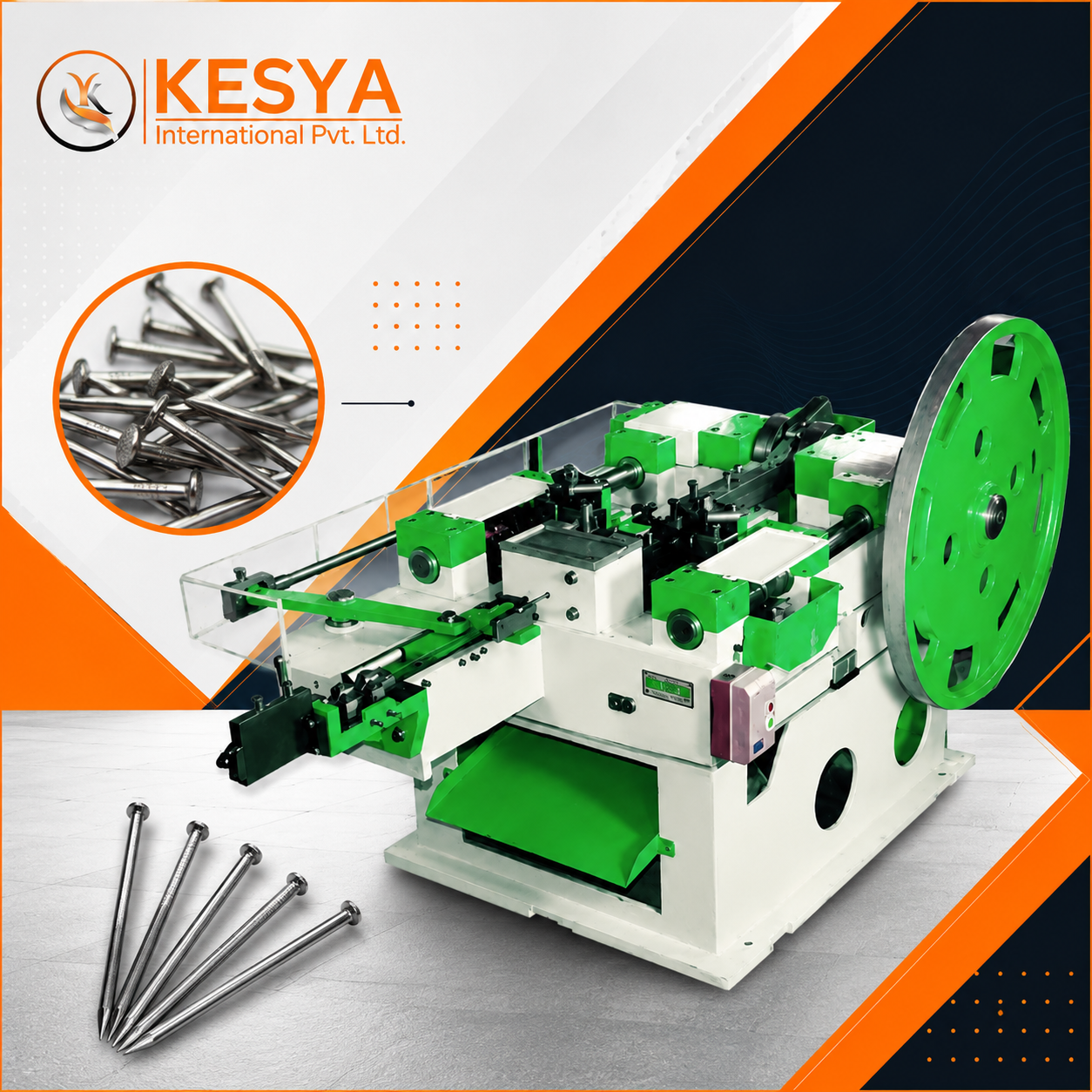
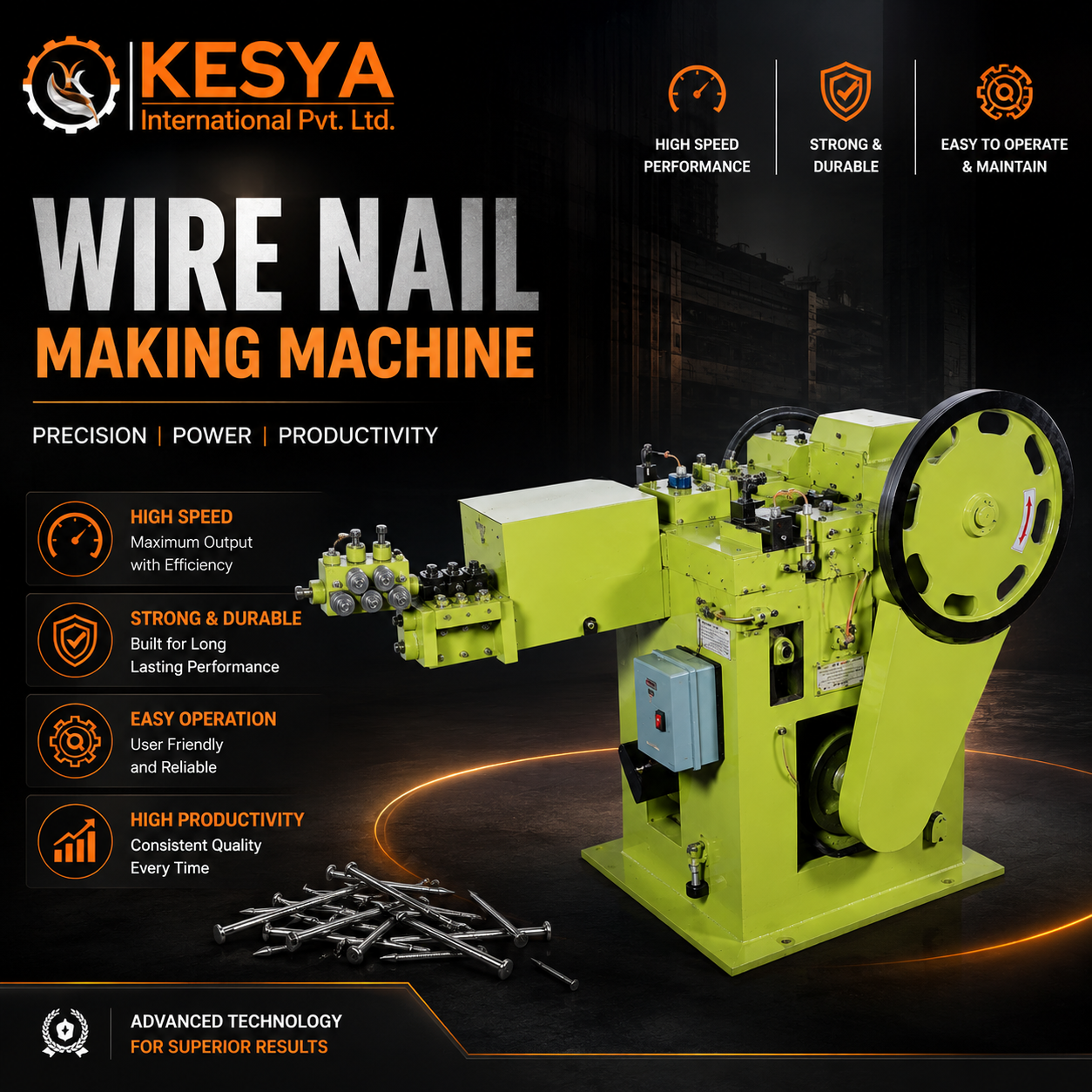
The Wire Nail Making Machine is one of the most profitable industrial machines used in the hardware manufacturing sector. It converts steel wire coils into perfectly shaped and durable nails through an automated manufacturing process. Due to the increasing demand in construction, furniture manufacturing, wooden packaging, infrastructure projects, and carpentry work, wire nails continue to remain one of the highest-selling hardware products in India and across the world.
If you are planning to start a nail manufacturing business or expand your existing production unit, understanding how a wire nail making machine works is essential. Modern nail making machines are designed with advanced automation technology that ensures high-speed production, excellent accuracy, low maintenance, and minimal raw material wastage.
Table of Contents
- Introduction to Wire Nail Making Machine
- How Does a Wire Nail Making Machine Work?
- Working Process Step by Step
- Main Components of the Machine
- Features of Wire Nail Making Machine
- Technical Specifications
- Production Capacity
- Applications
- Benefits of Wire Nail Manufacturing Machine
- Maintenance Tips
- Why Invest in a Wire Nail Making Machine?
- Frequently Asked Questions
Introduction to Wire Nail Making Machine
A Wire Nail Making Machine is an automatic industrial machine that transforms mild steel (MS), high carbon steel, or low carbon steel wire into finished nails. The complete manufacturing process includes wire feeding, wire straightening, cutting, head formation, point sharpening, and ejection of the finished nail.
The machine performs all these operations continuously with high precision, making it ideal for large-scale production units. Modern models are energy-efficient, user-friendly, and capable of producing thousands of nails every hour.
How Does a Wire Nail Making Machine Work?
The working principle of a Wire Nail Making Machine is based on automatic wire feeding and mechanical shaping technology. The machine pulls steel wire from a wire coil and feeds it into the processing chamber. The wire is cut according to the selected nail length, after which the machine simultaneously creates the nail head and sharp pointed tip.
After the shaping process is completed, the finished nail is automatically discharged into a collection tray. The entire production cycle is completed within a fraction of a second, allowing continuous high-speed manufacturing.
Step-by-Step Working Process
1. Wire Feeding
The steel wire coil is mounted on the wire stand. The machine automatically pulls the wire into the feeding system.
2. Wire Straightening
Special guide rollers straighten the wire to ensure perfect alignment before cutting.
3. Wire Cutting
The machine cuts the wire according to the selected nail size with high precision.
4. Nail Head Formation
A mechanical hammer compresses one end of the wire to create the nail head.
5. Point Formation
The opposite end is shaped into a sharp point for easy penetration into wood and other materials.
6. Automatic Ejection
The finished nail is automatically discharged into the output container while the machine immediately starts manufacturing the next nail.
Main Components of Wire Nail Making Machine
- Wire Feeding Unit
- Wire Straightening Rollers
- Cutting Die
- Nail Head Forming Die
- Point Forming System
- Main Motor
- Gear Transmission System
- Control Panel
- Lubrication System
- Safety Guards
Features of Wire Nail Making Machine
- High-speed automatic nail production
- Heavy-duty steel body construction
- Simple and user-friendly operation
- Produces different nail sizes
- Low power consumption
- Minimal raw material wastage
- Excellent dimensional accuracy
- High production efficiency
- Low maintenance cost
- Long operational life
- Stable continuous production
- High-quality nail finishing
- Strong mechanical structure
- Easy installation and operation
- Suitable for industrial production units
Technical Specifications
| Specification | Details |
|---|---|
| Machine Type | Automatic Wire Nail Making Machine |
| Raw Material | Mild Steel Wire, High Carbon Wire |
| Nail Diameter | 1 mm to 6 mm (Model Dependent) |
| Nail Length | 10 mm to 150 mm |
| Power Requirement | 2 HP – 10 HP |
| Voltage | 220V / 415V |
| Operation | Automatic |
| Body Material | Heavy Duty Mild Steel |
| Frequency | 50 Hz |
| Automation Grade | Semi Automatic / Fully Automatic |
Production Capacity
The production capacity depends upon the machine model, nail size, wire diameter, and motor power.
| Machine Model | Production Capacity |
|---|---|
| Small Model | 120–180 Nails per Minute |
| Medium Model | 220–350 Nails per Minute |
| Heavy Duty Model | 400–700 Nails per Minute |
| Industrial High-Speed Model | 700–1000+ Nails per Minute |
Applications
- Construction Industry
- Furniture Manufacturing
- Wooden Packaging Industry
- Pallet Manufacturing
- Interior Decoration
- Hardware Shops
- Engineering Workshops
- Building Material Suppliers
- Carpentry Industry
- Export Manufacturing Units
Benefits of Wire Nail Making Machine
- High production with low labor cost
- Excellent return on investment
- Consistent nail quality
- Low electricity consumption
- Reduced production cost
- Easy operation for beginners
- Minimal maintenance requirements
- Supports continuous industrial production
- Produces multiple nail sizes
- Suitable for small and large manufacturing businesses
- Long machine lifespan
- Increases business profitability
Maintenance Tips
- Lubricate moving parts regularly.
- Inspect cutting dies for wear.
- Keep the machine clean after every shift.
- Use only high-quality steel wire.
- Check motor alignment periodically.
- Tighten loose bolts and fasteners.
- Replace worn-out dies on time.
- Maintain proper electrical connections.
Why Invest in a Wire Nail Making Machine?
The demand for wire nails continues to grow because they are widely used in construction, furniture, packaging, infrastructure, and woodworking industries. Investing in a modern Wire Nail Making Machine enables manufacturers to achieve higher productivity, lower production costs, consistent quality, and faster delivery. With minimal maintenance requirements and high production capacity, it is an excellent business opportunity for entrepreneurs looking to establish a profitable manufacturing unit.
Frequently Asked Questions (FAQs)
1. What raw material is used in a Wire Nail Making Machine?
The machine mainly uses mild steel wire, high carbon steel wire, or low carbon steel wire.
2. How many nails can the machine produce?
Depending on the model, production ranges from approximately 120 to over 1000 nails per minute.
3. Can one machine produce different nail sizes?
Yes. By changing dies and machine settings, different nail lengths and diameters can be manufactured.
4. Is the machine suitable for small businesses?
Yes. Small, medium, and large models are available according to production requirements and investment budget.
5. What is the power consumption?
Most machines require between 2 HP and 10 HP depending on capacity.
6. Does the machine require skilled operators?
No. Modern machines are easy to operate and require only basic training.
7. What industries use wire nails?
Construction, furniture, carpentry, pallet manufacturing, wooden packaging, engineering, and hardware industries use wire nails extensively.
8. Is maintenance expensive?
No. Routine lubrication, die inspection, and timely replacement of worn components are usually sufficient to keep the machine operating efficiently.
Conclusion
A Wire Nail Making Machine is a reliable and high-return investment for businesses looking to enter the hardware manufacturing industry. With automatic operation, high-speed production, consistent quality, low maintenance, and the flexibility to manufacture multiple nail sizes, it helps manufacturers meet growing market demand while maximizing profitability. Choosing the right machine based on production capacity and business goals ensures long-term success and sustainable growth.
Buy Now
Wire Nail Making Machine
How Wire Nail Making Machine Works
Automatic Wire Nail Making Machine
Nail Manufacturing Machine
Wire Nail Machine Price
Nail Making Machine Features
Wire Nail Machine Specifications
High Speed Nail Making Machine
Nail Production Machine
Industrial Nail Making Machine
Wire Nail Manufacturing Business
Steel Nail Making Machine
Wire Nail Production Capacity
Nail Making Machine Benefits
Automatic Nail Production Machine
Nail Manufacturing Plant
Hardware Manufacturing Machine
Mild Steel Nail Machine
Nail Making Machine India
Wire Nail Business