- kesyaipl2@gmail.com
- Rajdhani Park, Mubarkpur, Delhi, 110041, India
Blogs
Industrial Wire Nail Making Machine – Cost, Capacity, Benefits & Technical Specifications
Price: ₹350000
Industrial Wire Nail Making Machine – Cost, Capacity, Benefits & Technical Specifications
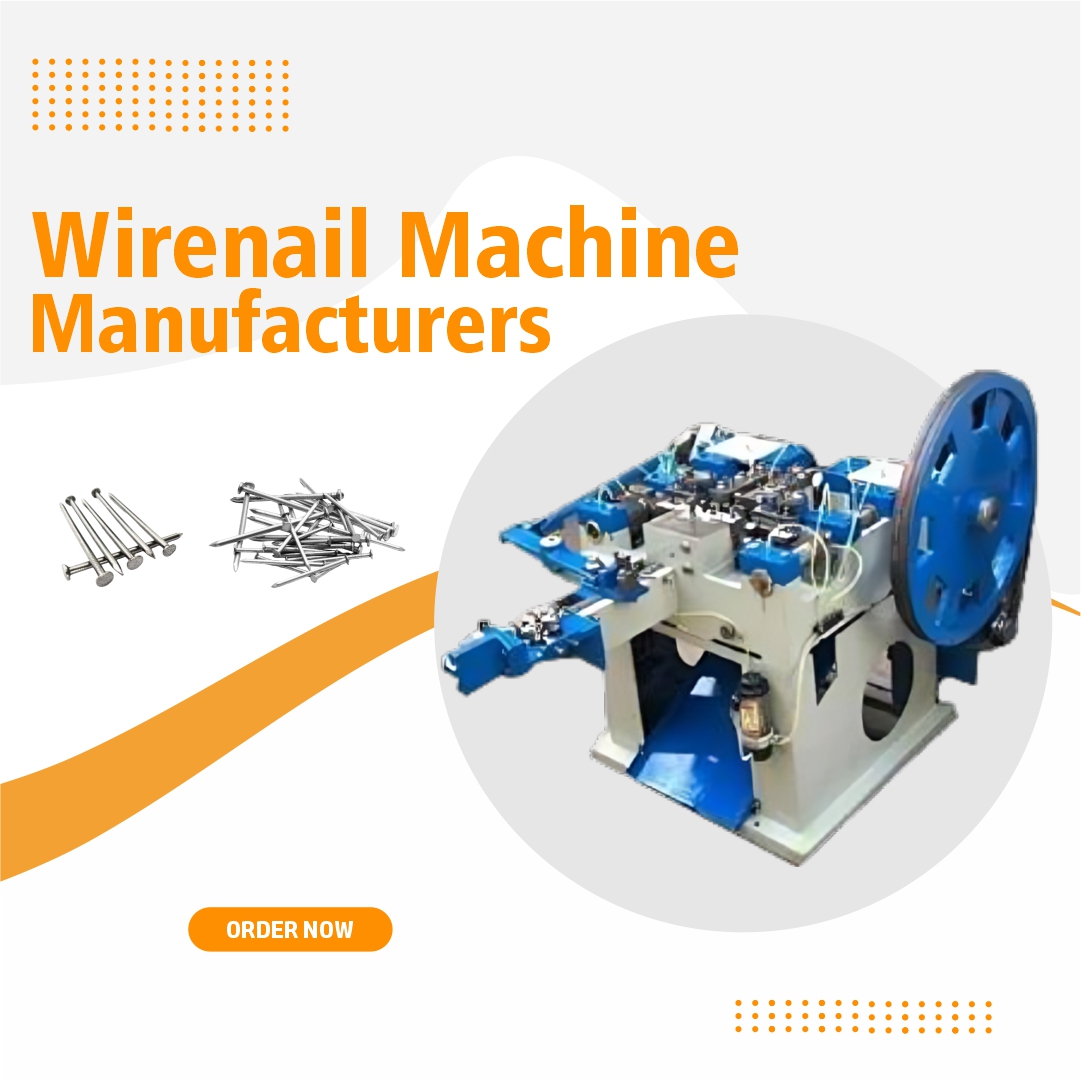
The Industrial Wire Nail Making Machine is a high-performance manufacturing solution designed to produce high-quality wire nails efficiently and consistently. It is widely used in hardware industries, construction material manufacturing, furniture production, packaging industries, and engineering workshops. Built with advanced automation and precision engineering, this machine delivers excellent productivity while minimizing labor costs and material wastage.
Whether you are starting a nail manufacturing business or expanding your existing production facility, investing in a reliable industrial wire nail making machine ensures long-term profitability. Modern machines are capable of producing thousands of nails per minute with superior dimensional accuracy and smooth finishing. They support different nail sizes by simply changing dies and cutters, making them highly versatile for industrial production.
Table of Contents
1. Introduction
2. Features of Industrial Wire Nail Making Machine
3. Technical Specifications
4. Production Capacity
5. Machine Cost
6. Applications
7. Benefits
8. Working Process
9. Why Choose This Machine?
10. Maintenance Tips
11. Frequently Asked Questions
Introduction
An Industrial Wire Nail Making Machine converts steel wire into finished nails through a fully automated process. The machine performs wire feeding, cutting, head forming, and point shaping continuously, resulting in high-speed nail production with minimal manual intervention. Depending on the model, it can manufacture various nail lengths and diameters suitable for multiple industrial applications.
Features of Industrial Wire Nail Making Machine
High-Speed Production
Designed for continuous industrial operation, the machine delivers fast production with stable performance and excellent output quality.
Automatic Operation
The automated feeding and forming mechanism reduces manual labor while increasing manufacturing efficiency.
Heavy-Duty Construction
Manufactured using premium-quality steel and durable components for long operational life.
Low Maintenance Design
Simple mechanical structure allows quick servicing and reduces maintenance downtime.
Multiple Nail Sizes
The machine supports different nail lengths and diameters through interchangeable tooling.
Energy Efficient
Optimized motor design helps reduce electricity consumption while maintaining high production capacity.
Consistent Quality
Produces nails with uniform head formation, accurate length, and sharp points suitable for commercial applications.
Technical Specifications
Machine Type
Automatic Industrial Wire Nail Making Machine
Production Capacity
Approximately 150–800 nails per minute (depending on machine model and nail size).
Supported Nail Length
15 mm to 150 mm (model dependent).
Wire Diameter
1.0 mm to 6.0 mm.
Power Requirement
3 HP to 15 HP depending on production capacity.
Voltage
220V / 380V / 415V, Three Phase.
Machine Material
Heavy-duty Mild Steel with precision-machined components.
Control System
Automatic mechanical or PLC-based control (model dependent).
Drive System
High-performance electric motor with durable transmission mechanism.
Production Capacity
The production output depends on nail size, wire quality, machine speed, and operating conditions. Industrial models generally manufacture between 150 and 800 nails every minute, making them ideal for medium and large-scale production units.
Industrial Wire Nail Making Machine Cost
The cost of an Industrial Wire Nail Making Machine depends on production capacity, automation level, motor power, machine configuration, brand, and optional accessories. Entry-level models are suitable for small businesses, while high-speed fully automatic machines are preferred for commercial manufacturing plants. Buyers should compare machine specifications, production requirements, after-sales support, and warranty before making a purchasing decision.
Applications
Construction Industry
Manufacturing nails used in building construction and infrastructure projects.
Furniture Manufacturing
Producing fastening nails for wooden furniture and carpentry work.
Packaging Industry
Manufacturing nails used for wooden boxes, pallets, and crates.
Hardware Stores
Large-scale production of commercial wire nails supplied to retailers and wholesalers.
Wood Processing Units
Suitable for producing nails required in timber processing industries.
Benefits of Industrial Wire Nail Making Machine
Higher Productivity
Produces large quantities of nails continuously with consistent quality.
Reduced Manufacturing Cost
Automation minimizes labor expenses and improves operational efficiency.
Excellent Return on Investment
High production capacity helps businesses recover investment quickly through increased output.
Versatile Production
Supports manufacturing of multiple nail sizes using the same machine.
Reliable Performance
Designed for long production cycles with minimal interruptions.
Low Material Waste
Accurate wire feeding ensures better utilization of raw materials.
Easy Operation
User-friendly controls simplify daily production activities.
Working Process
Step 1
Steel wire is loaded into the feeding mechanism.
Step 2
The wire is automatically straightened and fed into the machine.
Step 3
The machine cuts the wire to the required nail length.
Step 4
The nail head is formed while the opposite end is shaped into a sharp point.
Step 5
The finished nails are discharged for collection, inspection, and packaging.
Why Choose an Industrial Wire Nail Making Machine?
Industrial manufacturers prefer this machine because it combines high-speed production, precision engineering, energy efficiency, and long-term durability. It enables businesses to meet growing market demand while maintaining consistent product quality and reducing operational costs.
Maintenance Tips
Daily Lubrication
Lubricate moving parts regularly to ensure smooth machine operation.
Inspect Dies and Cutters
Replace worn tools promptly to maintain nail quality.
Clean the Machine
Remove dust, metal particles, and debris after production.
Monitor Electrical Components
Check motors, wiring, and control systems periodically.
Scheduled Servicing
Follow the manufacturer's maintenance schedule to maximize machine lifespan.
Frequently Asked Questions (FAQs)
What raw material is used in a wire nail making machine?
Low-carbon or high-carbon steel wire is commonly used for manufacturing wire nails.
What is the production capacity?
Depending on the model, production ranges from approximately 150 to 800 nails per minute.
Can one machine produce different nail sizes?
Yes. Different nail sizes can be produced by changing compatible dies and cutters.
Is the machine suitable for commercial manufacturing?
Yes. It is specifically designed for medium and large-scale industrial nail production.
Does the machine require skilled operators?
Basic machine operation training is generally sufficient, especially for automatic models.
How much electricity does the machine consume?
Power consumption depends on the machine capacity and motor rating, typically ranging from 3 HP to 15 HP.
What industries use wire nail making machines?
Construction, furniture manufacturing, hardware production, packaging, woodworking, and engineering industries commonly use these machines.
Conclusion
The Industrial Wire Nail Making Machine is an ideal investment for businesses seeking efficient, reliable, and high-volume nail production. With advanced automation, durable construction, flexible production capabilities, and low operating costs, it delivers exceptional performance for manufacturers across various industries. Selecting the right machine based on production requirements, technical specifications, and long-term operational needs can significantly improve manufacturing efficiency and business profitability.
Buy Now
Industrial Wire Nail Making Machine
Wire Nail Making Machine
Automatic Wire Nail Machine
Nail Manufacturing Machine
Wire Nail Production Machine
High Speed Nail Making Machine
Steel Nail Making Machine
Wire Nail Machine Price
Industrial Nail Machine
Nail Making Equipment
Nail Manufacturing Plant
Wire Nail Machine Manufacturer
Automatic Nail Production Machine
Nail Machine Specifications
Nail Machine Features
Nail Machine Benefits
Industrial Machinery
Wire Nail Machine Cost
Fastener Manufacturing Machine
Nail Making Business