- kesyaipl2@gmail.com
- Rajdhani Park, Mubarkpur, Delhi, 110041, India
Blogs

Slipper Making Machine: Complete Guide to Price, Features, Working Process & Business Profit in India (2026)
Price: ₹50000
Slipper Making Machine: Complete Guide to Price, Features, Working Process & Business Profit in India (2026)
The slipper manufacturing industry in India is growing rapidly due to increasing demand for affordable, durable, and fashionable footwear. Whether in cities or rural areas, slippers remain one of the most essential daily-use products. If you are planning to start a profitable manufacturing business in 2026, investing in a Slipper Making Machine can be an excellent decision.
This complete guide explains everything you need to know about slipper making machines, including their price, types, working process, features, specifications, production capacity, investment, raw materials, maintenance, and expected business profits.
Table of Contents
1. What is a Slipper Making Machine?
2. Types of Slipper Making Machines
3. Machine Features
4. Technical Specifications
5. Working Process
6. Raw Materials Required
7. Production Capacity
8. Investment & Business Profit
9. Advantages of Starting a Slipper Manufacturing Business
10. Maintenance Tips
11. Why Choose Our Slipper Making Machine?
12. Frequently Asked Questions
What is a Slipper Making Machine?
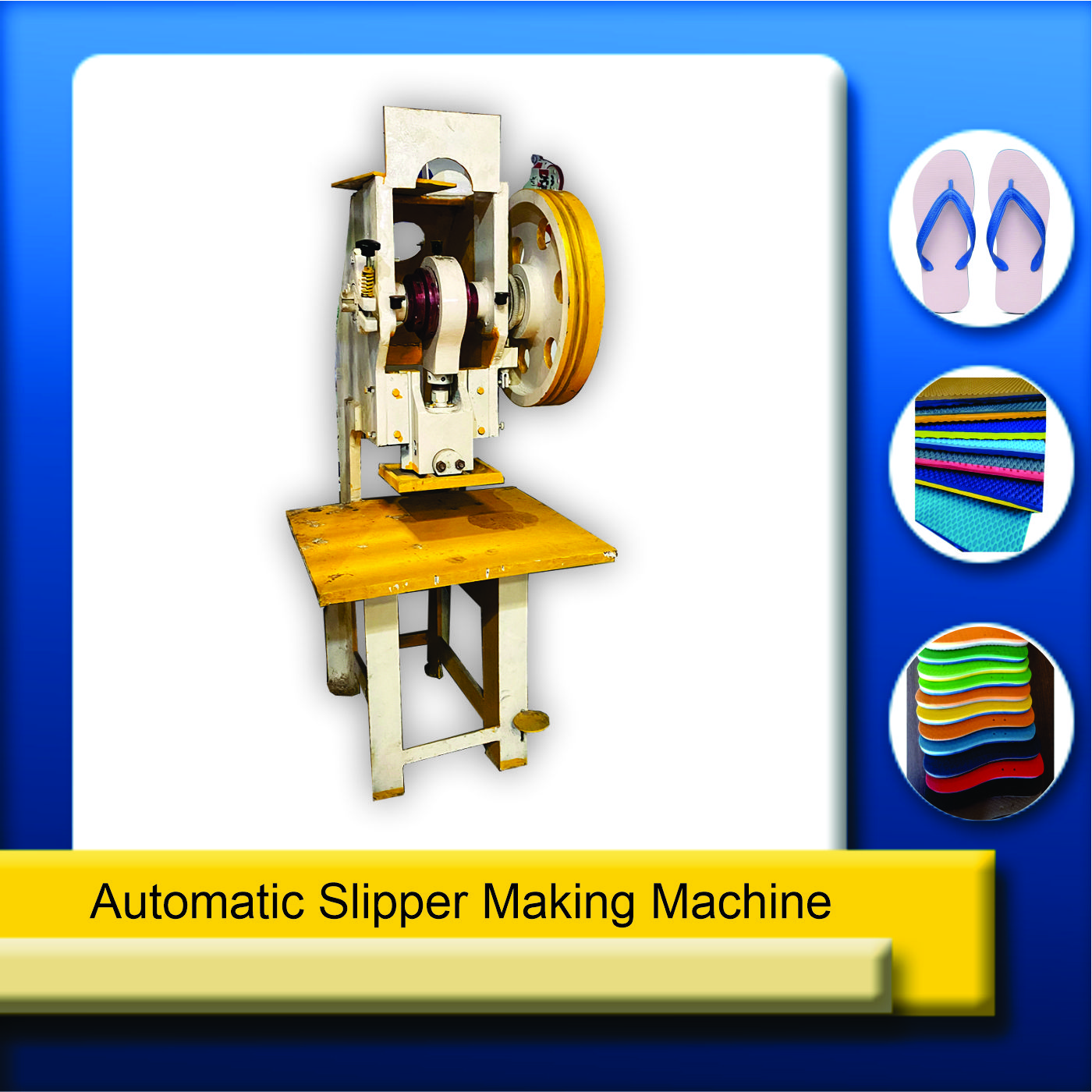
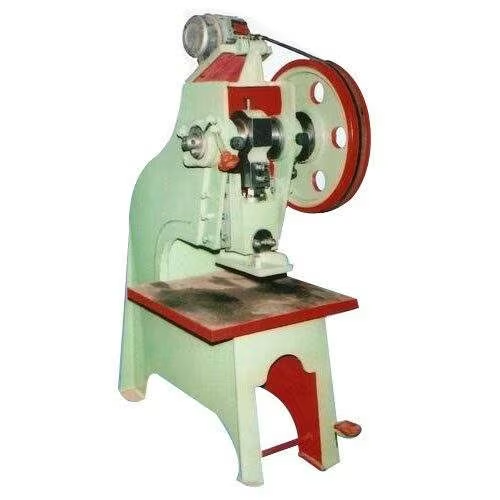
A Slipper Making Machine is an industrial machine designed to manufacture various types of slippers such as EVA slippers, rubber slippers, foam slippers, Hawai chappals, bathroom slippers, and customized footwear. The machine performs operations like sheet cutting, sole punching, strap hole making, embossing, and finishing with high precision.
Modern slipper making machines are designed for high production, low power consumption, easy operation, and minimal maintenance, making them ideal for startups, MSMEs, footwear manufacturers, and entrepreneurs.
Types of Slipper Making Machines
Semi Automatic Slipper Making Machine
Ideal for small businesses and startups, this machine requires limited manual operation while offering excellent production efficiency.
Automatic Slipper Making Machine
Suitable for medium and large-scale manufacturers, automatic machines provide higher production speed with consistent quality.
EVA Slipper Making Machine
Specially designed to manufacture lightweight EVA slippers that are popular across India.
Rubber Slipper Making Machine
Manufactures durable rubber slippers suitable for everyday use.
Foam Slipper Making Machine
Produces soft foam slippers commonly used in hotels, homes, and hospitals.
Main Features of Slipper Making Machine
High Production Efficiency
Manufactures hundreds to thousands of slipper pairs every day depending on machine configuration.
Heavy Duty Construction
Built with premium-grade steel for long operational life.
Precision Cutting
Ensures accurate slipper shapes with minimum raw material wastage.
User-Friendly Operation
Simple controls enable operators to learn quickly without extensive technical knowledge.
Low Maintenance
Requires minimal servicing while delivering continuous production.
Energy Efficient
Consumes less electricity compared to conventional manufacturing methods.
Multiple Slipper Designs
Supports manufacturing of different sizes, colors, and fashionable designs.
Technical Specifications
Machine Specifications
Machine Type
Semi Automatic / Automatic
Production Capacity
800–5000 pairs per day (Depending on model)
Power Requirement
2 HP – 7.5 HP
Voltage
220V / 415V
Operating System
Hydraulic / Pneumatic / Mechanical
Material Compatibility
EVA, Rubber, PVC, Foam, TPR Sheets
Operation
Easy and Safe
Machine Body
Heavy-duty Mild Steel Construction
Raw Materials Required
The following raw materials are commonly used for slipper production:
- EVA Sheets
- Rubber Sheets
- PVC Sheets
- Foam Sheets
- TPR Soles
- Slipper Straps
- Adhesive
- Printing Ink
- Packaging Material
How Does a Slipper Making Machine Work?
Step 1: Raw Material Selection
Select EVA, rubber, PVC, or foam sheets according to the slipper design.
Step 2: Sheet Cutting
The machine cuts raw sheets into slipper sole shapes using precision dies.
Step 3: Hole Punching
Automatic punching creates strap holes accurately.
Step 4: Strap Fixing
Slipper straps are inserted and fixed securely.
Step 5: Finishing
Edges are trimmed and the product is checked for quality.
Step 6: Packaging
Finished slippers are packed and prepared for dispatch.
Production Capacity
Depending on machine model and manpower, production capacity ranges from:
- 800 Pairs per Day
- 1200 Pairs per Day
- 2000 Pairs per Day
- 3000 Pairs per Day
- 5000+ Pairs per Day
Slipper Making Machine Price in India (2026)
The price depends upon automation level, production capacity, hydraulic system, accessories, and customization requirements.
- Small Manual Machines
- Semi Automatic Machines
- Hydraulic Slipper Machines
- Fully Automatic Slipper Production Lines
For the latest price quotation, machine demonstration, and installation support, contact a trusted slipper making machine manufacturer.
Investment Required
Basic Investment Includes
- Machine Purchase
- Raw Materials
- Factory Space
- Electric Connection
- Labor Cost
- Packaging Material
- Transportation
The business can be started with a moderate investment and expanded gradually as market demand increases.
Business Profit Potential
India's footwear market continues to grow every year, creating significant opportunities for slipper manufacturers. By supplying wholesalers, retailers, distributors, online marketplaces, schools, hospitals, hotels, and export markets, entrepreneurs can build a profitable business with recurring demand.
Higher production efficiency, better quality, attractive designs, and effective marketing can significantly improve overall profitability.
Benefits of Slipper Making Machine
Higher Productivity
Produces more slippers in less time.
Reduced Labor Cost
Automation minimizes manual work.
Excellent Product Quality
Uniform size and professional finishing.
Low Material Wastage
Precision cutting reduces production losses.
Easy Maintenance
Designed for long-term industrial use.
Quick Return on Investment
Growing market demand helps recover investment faster.
Multiple Product Manufacturing
Manufacture various slipper designs from one machine.
Maintenance Tips
Daily Cleaning
Keep machine free from dust and material residue.
Lubrication
Lubricate moving components regularly.
Hydraulic Inspection
Check oil level and hydraulic pressure periodically.
Electrical Maintenance
Inspect wiring and electrical panels for safe operation.
Die Maintenance
Keep cutting dies sharp for accurate cutting.
Why Choose Our Slipper Making Machine?
- Latest Technology
- Premium Build Quality
- Competitive Price
- Easy Installation
- Operator Training
- Excellent After-Sales Service
- Low Power Consumption
- High Production Capacity
- Customization Available
- Nationwide Delivery Across India
Frequently Asked Questions (FAQs)
What is the price of a slipper making machine in India?
The price varies depending on machine type, automation level, production capacity, and additional features.
Can I start a slipper manufacturing business from home?
Yes. Small-scale and semi-automatic machines are suitable for home-based or small workshop production.
Which raw material is commonly used?
EVA sheets, PVC sheets, rubber sheets, foam sheets, straps, adhesives, and packaging materials.
How many slippers can the machine produce daily?
Depending on the model, production ranges from approximately 800 to over 5,000 pairs per day.
Is technical training required?
No extensive technical knowledge is required. Most machines are easy to operate and manufacturers typically provide installation and operator training.
Is this business profitable in India?
Yes. With consistent demand, efficient production, quality products, and a strong distribution network, slipper manufacturing offers excellent profit potential for entrepreneurs in 2026 and beyond.
Conclusion
A Slipper Making Machine is an ideal investment for entrepreneurs looking to enter the footwear manufacturing industry in India. With increasing consumer demand, low production costs, scalable operations, and attractive profit margins, this business offers long-term growth opportunities. By choosing the right machine, using quality raw materials, and maintaining efficient production, you can establish a successful slipper manufacturing business in 2026.
Buy Now
Slipper Making Machine
Slipper Making Machine Price
Slipper Making Machine India
Automatic Slipper Making Machine
Semi Automatic Slipper Making Machine
EVA Slipper Making Machine
Hawai Chappal Making Machine
Rubber Slipper Machine
Footwear Manufacturing Machine
Slipper Manufacturing Business
Slipper Making Business India
Slipper Machine Cost
Foam Slipper Making Machine
Chappal Making Machine Price
Footwear Machine Manufacturer
Slipper Production Machine
Slipper Manufacturing Plant
Slipper Business Profit
EVA Sheet Cutting Machine
Slipper Sole Making Machine
Footwear Business 2026
.jpg)