- kesyaipl2@gmail.com
- Rajdhani Park, Mubarkpur, Delhi, 110041, India
Blogs
Slipper Making Machine Manufacturer in India | Reliable Production Solutions
Price: ₹56500
Slipper Making Machine for the Indian Footwear Industry
Slippers are an essential footwear product in India, with demand coming from households, retail stores, wholesalers and footwear distributors. Customers look for different styles, sizes, colours and designs according to their daily requirements. This creates opportunities for entrepreneurs and manufacturers interested in establishing or expanding a slipper production business.
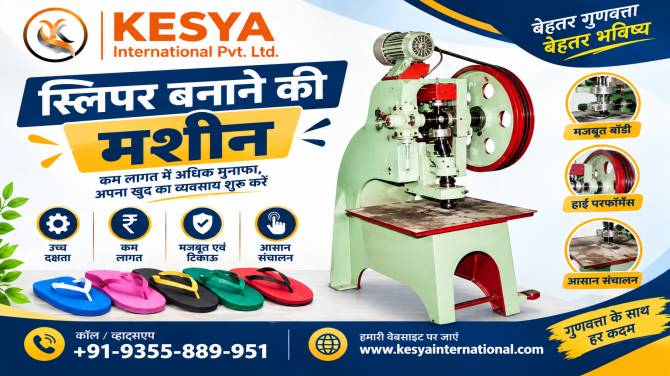
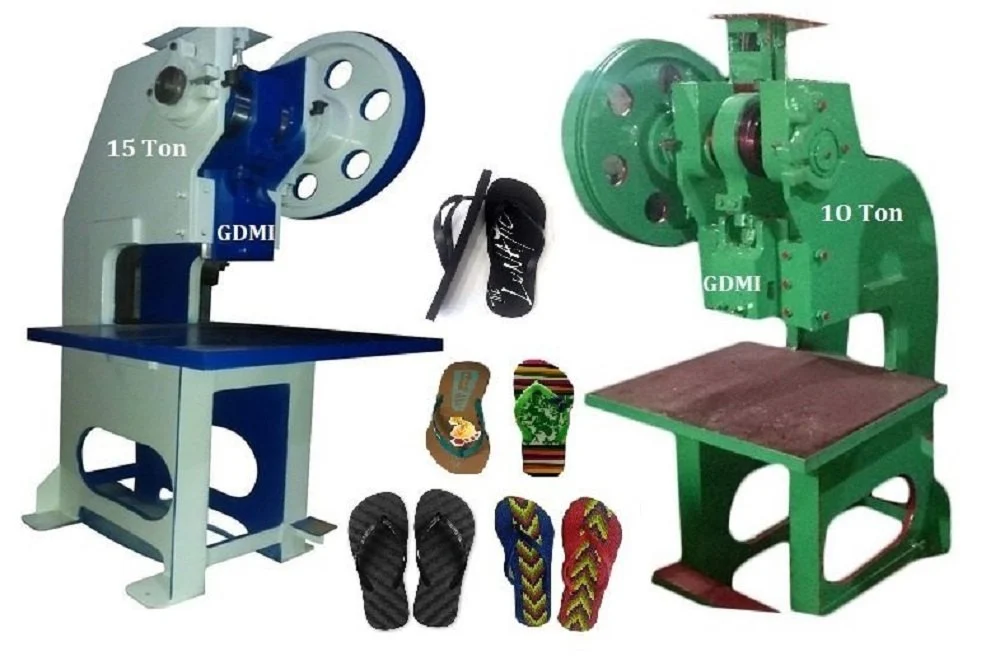
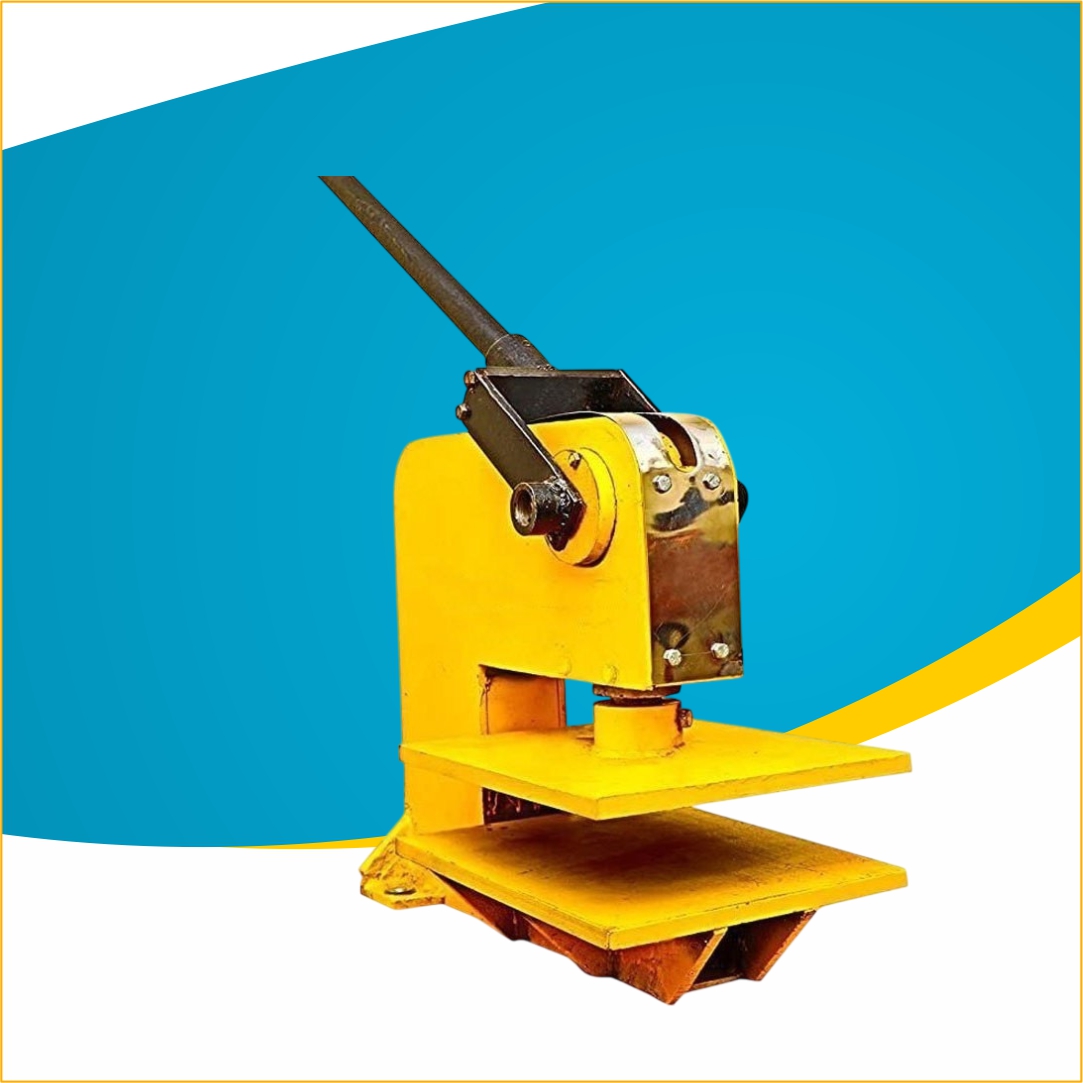
A suitable Slipper Making Machine helps manufacturers carry out specific operations involved in footwear production. Depending on its design and configuration, the machinery may be used for sole cutting, shaping, punching and other manufacturing activities.
Kesya International provides industrial machinery solutions for businesses exploring footwear manufacturing equipment. Selecting the right machine requires understanding the intended product, raw materials, production process and investment requirements.
Importance of Choosing Suitable Slipper Manufacturing Machinery
A slipper manufacturing unit needs equipment that matches its production requirements. The machinery should be selected according to the type of slippers, material thickness, product dimensions and expected production volume.
Different manufacturing operations may require different equipment. Sole preparation and cutting, for example, may involve separate machinery from strap fitting and finishing.
A properly planned production arrangement helps manufacturers organise their workflow. It is important to understand the machine's actual functions and whether additional tools or equipment will be required.
Different Slipper Designs and Production Requirements
The footwear market includes several slipper categories. Manufacturers may focus on everyday slippers, lightweight products or designs intended for customers looking for different colours and styles.
Each product category may have different manufacturing requirements. Sole shape, thickness, size and strap arrangement can influence the machinery and tooling needed.
Businesses should research their target market before selecting a product range. This makes it easier to decide which machine configuration and raw materials are suitable for the planned manufacturing operation.
How a Slipper Making Machine Supports Production
The manufacturing process begins with selecting appropriate raw materials. The sole material is prepared according to the required specifications and processed into the desired shape.
Depending on the machine, cutting operations may be performed to achieve the required dimensions. Additional punching or hole-making operations may be needed for strap fitting.
After the straps are attached, the finished slippers are checked for dimensions, appearance and finishing quality.
The exact process varies according to the machine configuration and product design. Buyers should ask the manufacturer or supplier to explain the complete working process before purchasing.
Factors to Consider When Selecting a Slipper Making Machine Manufacturer
Selecting machinery involves evaluating both the equipment and the supplier.
Technical specifications should be checked carefully. Buyers should understand the machine's functions, supported materials, operating method and power requirements.
Production capacity should be suitable for the intended business. Ask for model-specific output details and clarify the conditions under which the stated capacity can be achieved.
Other considerations include machine dimensions, accessories, maintenance requirements, spare-parts availability, installation arrangements and warranty terms.
A machine demonstration can also help buyers understand its operation and suitability for their manufacturing needs.
Slipper Making Machine Price in India
The price of a Slipper Making Machine in India depends on its type, specifications, automation level, functions and accessories. Different configurations may have different investment requirements.
The total business investment should include more than the machine purchase price. Raw materials, electricity, labour, workspace, packaging, transportation and maintenance also contribute to manufacturing expenses.
Entrepreneurs should request detailed quotations and compare machines according to their technical features. A lower initial price should not be the only deciding factor when selecting production equipment.
For an accurate quotation, buyers should explain the intended slipper design, material requirements and production expectations.
Setting Up a Slipper Manufacturing Unit
A successful manufacturing setup begins with identifying market demand. Entrepreneurs should research local retailers, wholesalers, distributors and other potential customers.
The next step is deciding which slipper designs and sizes to manufacture. This decision helps determine the required raw materials, machinery and production operations.
The workspace should have enough room for machinery, material storage, production activities and finished-product handling. Electricity requirements and operator training should be arranged before regular production.
Initial trial runs can help manufacturers check cutting accuracy, dimensions, strap fitting and finishing. Regular inspection can help maintain product consistency.
Why Consider Kesya International?
Kesya International provides industrial machinery solutions for entrepreneurs and businesses interested in manufacturing equipment. Buyers exploring a Slipper Making Machine can discuss their production requirements and understand the available equipment options.
Before purchasing, businesses should confirm the machine model, specifications, supported materials, production capacity, accessories, installation requirements and commercial terms.
This evaluation helps manufacturers choose machinery according to their actual production needs.
Frequently Asked Questions About Slipper Making Machines
Which Slipper Making Machine is best for manufacturing in India?
The best machine depends on the product design, raw materials, production volume and investment budget. Compare technical specifications before making a selection.
How do I find a Slipper Making Machine manufacturer in India?
Research industrial machinery suppliers, compare their machine details and request demonstrations and quotations. Kesya International can be approached to discuss machinery requirements.
What is the price of a Slipper Making Machine?
The price varies according to machine type, functions, specifications and accessories. Ask for a quotation for the exact model.
Can I start a slipper manufacturing business on a small scale?
A small-scale setup may be possible depending on the product range, equipment and investment capacity. Prepare a budget before purchasing machinery.
What materials are used in slipper manufacturing?
Materials vary according to the slipper design and construction. Confirm that the selected equipment is suitable for the materials you intend to process.
How many slippers can be produced in a day?
Daily output depends on machine specifications, operating hours, product complexity, material handling and operator efficiency.
Does slipper manufacturing require multiple machines?
Some manufacturing setups require separate equipment for cutting, punching, assembly and finishing. The exact requirement depends on the production process.
Can a machine produce different slipper sizes?
Different sizes may be possible with appropriate cutting tools, dies or machine arrangements. Confirm the supported size range before purchasing.
Is automatic slipper machinery suitable for large production?
Automatic machinery may suit businesses that need reduced manual involvement in certain operations. Actual suitability depends on the model and production requirements.
What should I check before buying slipper manufacturing equipment?
Check specifications, material compatibility, production capacity, power requirements, machine demonstration, accessories, spare parts and warranty conditions.
How much space is required for slipper production?
Space requirements depend on the machine dimensions, number of operations, raw material storage and finished-product inventory.
Is slipper manufacturing profitable in India?
Profitability depends on market demand, raw material costs, selling prices, labour, competition and distribution. A realistic business calculation is essential.
Can beginners operate a Slipper Making Machine?
Beginners can learn to operate suitable machinery through proper training and by following the manufacturer's operating instructions.
How can I maintain slipper product quality?
Select suitable materials, maintain accurate cutting dimensions, train operators and inspect finished products regularly.
Where can I purchase a Slipper Making Machine for my business?
Contact industrial machinery suppliers, share your production requirements and request technical specifications and quotations. Kesya International can be contacted for a discussion about suitable machinery.
More info: Automatic & Manual Slipper Making Machine Manufacturer | Chappal Making Machine
Buy Now
Slipper Making Machine Manufacturer in India
Slipper Making Machine
Slipper Manufacturing Machine
Slipper Machine Supplier
Slipper Machine Price
Slipper Manufacturing Equipment
Slipper Production Machinery
Slipper Manufacturing Business
Slipper Factory Setup
Slipper Production Unit
Slipper Cutting Machine
Slipper Sole Cutting Machine
Commercial Slipper Manufacturing
Industrial Slipper Making Machine
Footwear Manufacturing Machinery
Footwear Production Equipment
Slipper Machine for Small Business
Slipper Manufacturing Company India
Kesya International