- kesyaipl2@gmail.com
- Rajdhani Park, Mubarkpur, Delhi, 110041, India
Blogs
Slipper Making Machine | Make in India Manufacturing Opportunities
Price: ₹57500
Slipper Making Machine for India's Growing Footwear Sector
India's footwear industry provides opportunities for entrepreneurs interested in manufacturing everyday footwear products. Slippers are widely used across the country, and customers look for different designs, sizes, colours and price ranges. This creates opportunities for small businesses, wholesale manufacturers and established footwear companies.
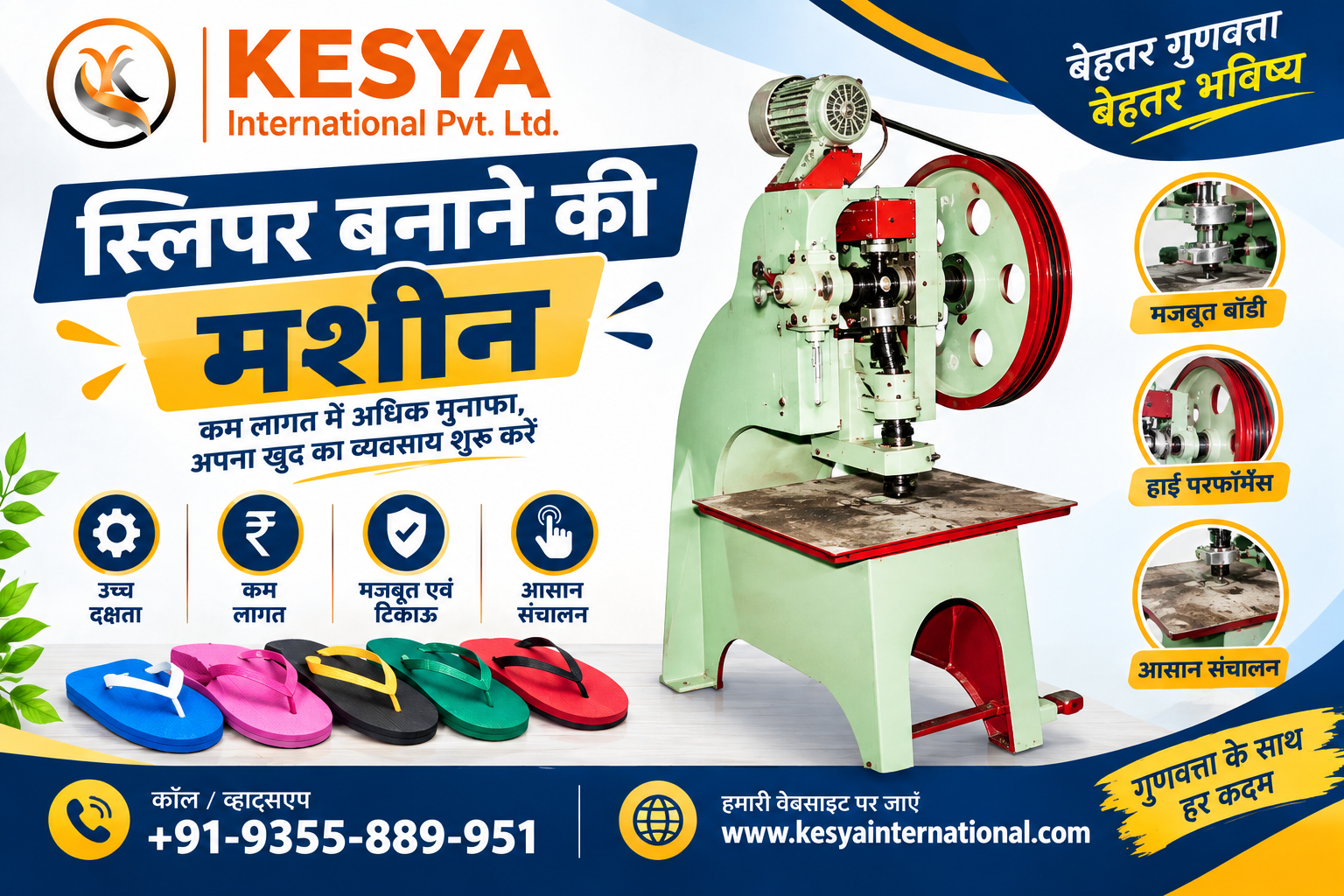
A suitable Slipper Making Machine can help businesses establish a production unit and carry out different manufacturing operations. Depending on its configuration, the machine may be used for sole cutting, shaping, punching and other production activities.
Kesya International offers industrial machinery solutions for businesses exploring footwear manufacturing equipment. Before investing, entrepreneurs should understand their product requirements, manufacturing process, machine specifications and overall business budget.
Why Slipper Manufacturing Is Relevant to Make in India
Make in India encourages businesses to explore domestic manufacturing opportunities across different industries. Footwear production is one area where entrepreneurs can develop manufacturing capabilities and supply products to local markets.
A slipper manufacturing business can serve retailers, wholesalers, distributors and footwear traders. Businesses may focus on affordable everyday slippers or explore different product styles according to customer preferences.
However, a successful manufacturing unit requires proper planning, suitable machinery, quality materials and an effective sales strategy.
Understanding the Working Process of a Slipper Making Machine
The working process depends on the type of machine and the manufacturing operation it performs.
The process generally begins with selecting and preparing the sole material. The material is then cut according to the required product shape and dimensions. Depending on the design, punching or hole-making operations may be required for strap fitting.
After assembly, the slippers are checked for dimensions, appearance and finishing quality.
Different operations may require separate equipment. Buyers should therefore understand the complete manufacturing process and confirm which operations are supported by the selected machine.
Selecting Machinery for Different Slipper Products
Slipper manufacturers may produce different footwear styles according to customer demand. Everyday slippers, lightweight designs and fashion-oriented products can have different material and manufacturing requirements.
The choice of machinery depends on the sole material, thickness, product dimensions and required cutting arrangements. Businesses planning to manufacture several designs should check whether the selected machine supports the necessary tooling and size variations.
Researching the target market before selecting equipment helps manufacturers avoid purchasing machinery that does not match their intended product range.
Important Factors When Buying a Slipper Making Machine
Before purchasing machinery, buyers should evaluate the machine's technical details.
Material compatibility should be confirmed according to the raw materials used in production. The operating method, power requirements and machine dimensions should also be understood.
Production capacity is another important consideration. Ask the supplier for model-specific output information and clarify the conditions under which the expected output can be achieved.
Buyers should also check accessories, spare-parts availability, maintenance requirements, installation arrangements and warranty terms.
A practical machine demonstration can help entrepreneurs understand the equipment's working process.
Slipper Making Machine Price in India
The Slipper Making Machine price in India depends on the machine model, technical specifications, production functions, automation level and included accessories.
A machine used for one specific operation may have a different price from a setup involving multiple production functions. The overall investment may also include raw materials, electricity, labour, workspace, packaging and transportation.
Entrepreneurs should request detailed quotations and compare the features included in each offer. Evaluating the machine's suitability is more important than selecting equipment based only on its initial price.
For an accurate quotation, buyers should share their intended slipper designs, materials and production requirements.
How to Start a Slipper Manufacturing Business Under Make in India
Starting a manufacturing unit requires market research and financial planning. Entrepreneurs should identify potential customers and understand the demand for different slipper products in their target market.
Footwear retailers, wholesalers, distributors and local traders can be potential customers. Their requirements can help manufacturers select suitable designs, sizes and product categories.
After deciding the product range, entrepreneurs should prepare a machinery plan and arrange an appropriate workspace. The production area should have sufficient room for equipment, raw materials, finished goods and packaging.
Operators should receive proper training before regular production begins. Trial manufacturing and quality inspection can help identify production issues and improve consistency.
Why Explore Machinery from Kesya International?
Kesya International provides industrial machinery solutions for businesses interested in manufacturing equipment. Entrepreneurs exploring a Slipper Making Machine can discuss their intended production process and machinery requirements.
Before confirming a purchase, buyers should verify the available model, machine specifications, supported materials, production capacity, accessories, installation requirements and commercial terms.
This helps businesses select equipment according to their manufacturing plans and investment capacity.
Frequently Asked Questions About Slipper Making Machines
What is a Slipper Making Machine used for?
It is used for specific slipper manufacturing operations such as sole cutting, shaping and punching, depending on the machine model.
How can I start a slipper manufacturing business in India?
Research the market, select your product range, prepare an investment budget, choose suitable machinery and arrange raw materials and workspace.
What is the price of a Slipper Making Machine in India?
The price varies according to machine specifications, functions, automation and accessories. Contact a supplier for a current quotation.
Is slipper manufacturing a Make in India business opportunity?
Domestic slipper manufacturing can be explored as part of India's wider manufacturing sector. Business success depends on product quality, market demand and production costs.
Which machine is suitable for a small slipper manufacturing unit?
The right machine depends on the product design, investment budget, available workspace and production requirements.
What materials are used to manufacture slippers?
Materials depend on the slipper design and construction. Buyers should confirm material compatibility with the machine supplier.
Can different slipper sizes be manufactured using one machine?
This depends on the machine configuration and available cutting tools or dies. Confirm the supported sizes before purchasing.
How many slippers can a machine produce per day?
Output depends on machine specifications, operating hours, material handling, product design and operator efficiency.
Do I need separate machines for slipper cutting and punching?
Some production arrangements require separate equipment for individual operations. The requirement depends on the machine configuration and manufacturing process.
What should I check before purchasing slipper machinery?
Check specifications, material compatibility, production capacity, power requirements, accessories, machine demonstration and warranty terms.
Is automatic slipper machinery suitable for commercial production?
Automatic equipment may reduce manual involvement in certain operations. Its suitability depends on the machine's actual functions and production requirements.
How much investment is required for a slipper manufacturing unit?
Investment depends on machinery, raw materials, workspace, labour, electricity, packaging and other operating expenses.
Can beginners operate slipper manufacturing machinery?
Beginners can learn to operate suitable machines through proper training and by following the manufacturer's instructions.
How can I find a slipper machine manufacturer in India?
Compare industrial machinery manufacturers and suppliers, request technical details and arrange demonstrations. Kesya International can be approached to discuss machinery requirements.
What determines the quality of manufactured slippers?
Material selection, cutting accuracy, correct assembly, finishing and regular quality inspections all contribute to the finished product.
More info: Automatic & Manual Slipper Making Machine Manufacturer | Chappal Making Machine
Buy Now
Slipper Making Machine
Make in India Slipper Manufacturing
Slipper Manufacturing Machine
Slipper Making Machine India
Slipper Machine Manufacturer
Slipper Machine Supplier
Slipper Machine Price in India
Slipper Production Machinery
Slipper Manufacturing Business
Slipper Factory Setup
Slipper Manufacturing Unit
Slipper Sole Cutting Machine
Slipper Cutting Equipment
Commercial Slipper Production
Industrial Slipper Machine
Footwear Manufacturing Business India
Footwear Production Equipment
Indian Slipper Manufacturing
Kesya International